What Is Psychological Safety — and Why Does It Matter Here?
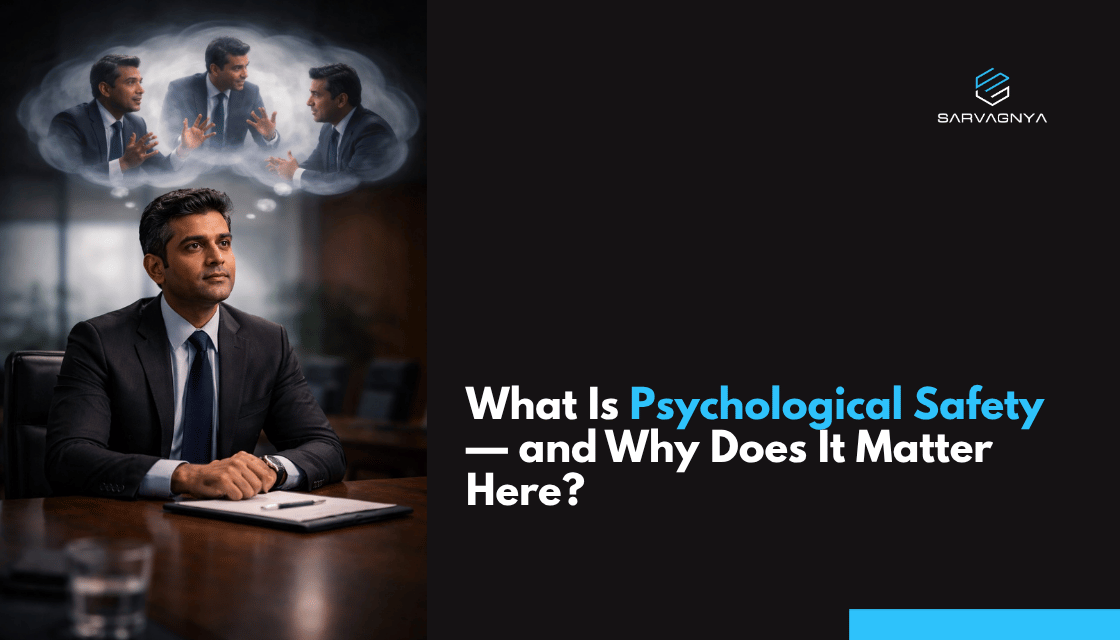
Harvard Business School Professor Amy Edmondson defines psychological safety as the shared belief that it is safe to take interpersonal risks — to speak up, admit mistakes, challenge ideas, and raise concerns — without fear of embarrassment or career damage. It sounds straightforward. In the context of a promoter-led Indian business, where the CEO is often the founder, the majority shareholder, and the ultimate authority simultaneously, it is extraordinarily difficult to achieve.
The business case is not soft. Google’s Project Aristotle study of over 180 teams found psychological safety to be the single most important differentiator of high-performing teams — above individual talent or seniority. BCG research found that only 3% of employees plan to leave organisations where they feel psychologically safe; in low-safety environments, that rises to 12%. Gallup data shows psychologically safe teams achieve 76% more engagement and 50% greater productivity.
“Psychological safety is the most critical of the five key dynamics that set successful teams apart.” — Google Project Aristotle
When VPs and GMs do not feel safe to speak honestly to the Promoter CEO, organisations lose precisely the layer of strategic intelligence they need most: experienced, informed, ground-level perspective at the exact moment decisions are being made.
The Promoter CEO Dynamic: A Uniquely Indian Power Structure
Geert Hofstede’s Power Distance Index (PDI) measures how much less powerful members of a society accept unequal power distribution. India scores 77 out of 100 — compared to the US at 40, the UK at 35, and Denmark at 18. This is the cultural operating system running beneath every leadership interaction in India. In promoter-led companies, its effects are amplified to a degree that professional-management or MNC structures rarely produce.
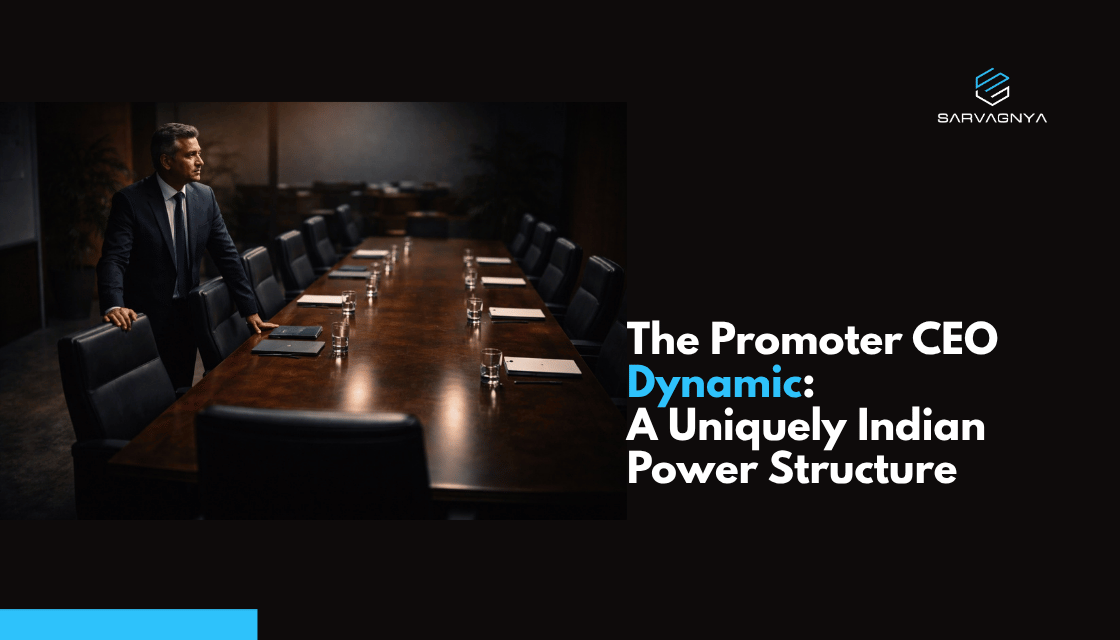
The Promoter CEO occupies a unique and formidable position. He or she is not just the most senior executive — they are often the founder, the owner, and the embodiment of the organisation’s identity. This creates a psychological dynamic that goes well beyond normal hierarchical deference. VPs and GMs are not merely managing upward to a boss; they are navigating a relationship with someone whose personal identity is fused with the business itself. Disagreeing with the strategy can feel, consciously or not, like questioning the founder’s life’s work.
Add to this the reality that in many Indian promoter businesses, career trajectories — promotions, lateral moves, compensation, even survival — are perceived to depend heavily on the Promoter CEO’s personal favour. This perception, whether accurate or not, produces the most corrosive condition for psychological safety: the belief that honesty carries personal risk.
What Actually Happens in the Room
The consequences of this dynamic are specific and serious.
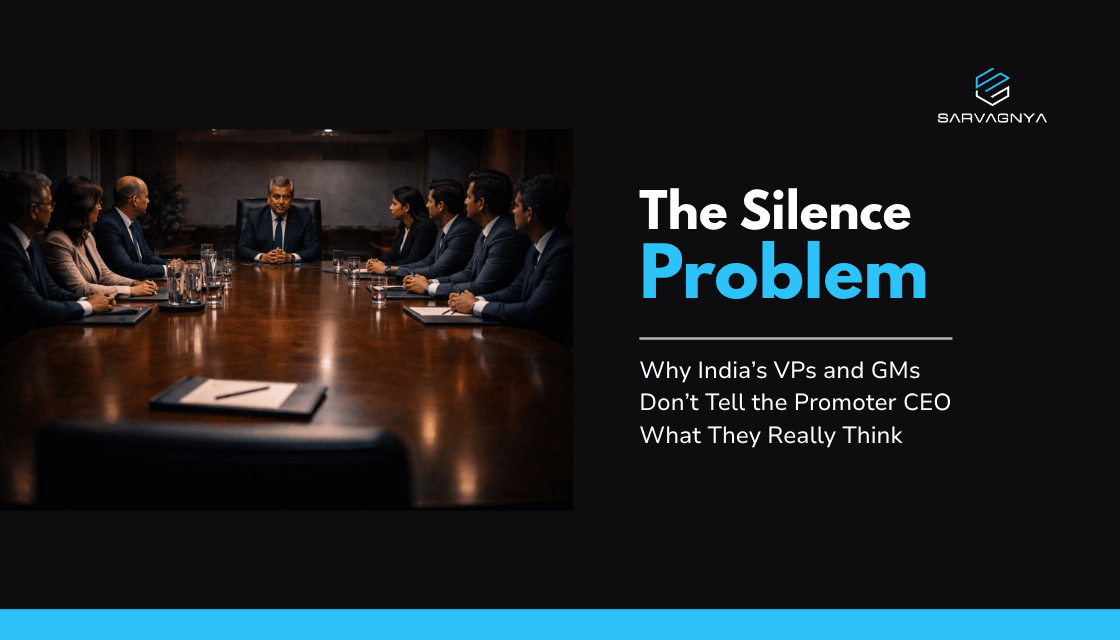
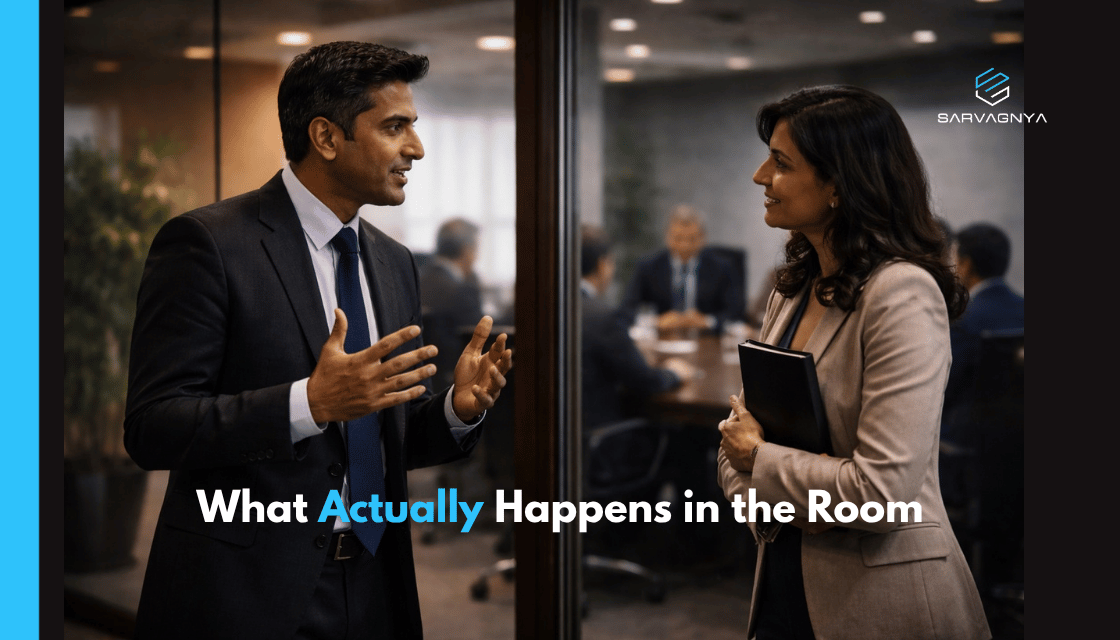
VPs and GMs become skilled at ‘managing up’ rather than advising up. They learn to read the Promoter CEO’s preferences and frame their inputs accordingly. Meetings become validation exercises rather than genuine decision forums. The most strategically important conversations — about risks, about market realities, about organisational gaps — happen after the meeting, not in it. The Promoter CEO, insulated by deference, receives a filtered version of reality.
Research on Indian IT firms (PMC, 2022) found that in organisations with absolute leadership authority, senior employees suppress opinions as a professional survival strategy. A 2024 BMC Public Health study confirmed that hierarchical authority directly suppresses willingness to speak up even when the stakes are high. These findings are not limited to junior staff — they apply with particular force to senior leaders operating under a dominant authority figure.
The pattern I see repeatedly in my consulting work is what I call ‘deferred candour’ — the VP who raises the real concern only after the decision has been implemented and begun to fail. By then, the cost of the original silence has already been paid. The market opportunity missed. The operational risk realised. The talent lost.
The most strategically important conversations happen after the meeting, not in it. The Promoter CEO receives a filtered version of reality — and makes decisions accordingly.
Women at VP and GM level face an additional layer of this dynamic. Research consistently shows that in male-dominated leadership environments with high power distance, women’s strategic inputs are more frequently dismissed or attributed to others. In promoter-led businesses where the inner circle is often built on long personal trust relationships, women leaders face the compound difficulty of the cultural hierarchy and the access hierarchy simultaneously.

The Business Cost: What the Promoter CEO Is Actually Losing
This is not an abstract organisational development concern. The silence of senior leaders carries a direct and quantifiable business cost.
When VPs and GMs do not speak honestly, the Promoter CEO loses access to early warning signals on strategy, operations, talent, and culture. Decisions get made on incomplete information. Risks accumulate below the surface until they erupt. Talent — particularly the most capable and self-respecting leaders — quietly exits, unwilling to spend careers suppressing their professional judgment.
meQuilibrium research (2022) found that 60% of employees with low psychological safety report burnout, and 34% are planning to leave. At VP and GM level, this attrition carries disproportionate cost — in institutional knowledge, client relationships, team stability, and the time and expense of replacement. And the replacements, entering the same cultural dynamic, quickly learn the same silence.
For promoter-led businesses with ambitions to professionalise, scale, or attract institutional investment, the absence of psychological safety at the senior leadership level is also a governance risk. Boards and investors increasingly scrutinise leadership culture. A VP cohort that cannot challenge the CEO is an executive team that cannot protect the organisation from its own blind spots.
What the Promoter CEO Can Do: A Practical Starting Point
The uncomfortable truth is that this dynamic cannot be fixed by the VPs and GMs. It can only be changed by the Promoter CEO. Psychological safety at the top is, in every sense, a leadership choice. Here is where to begin.
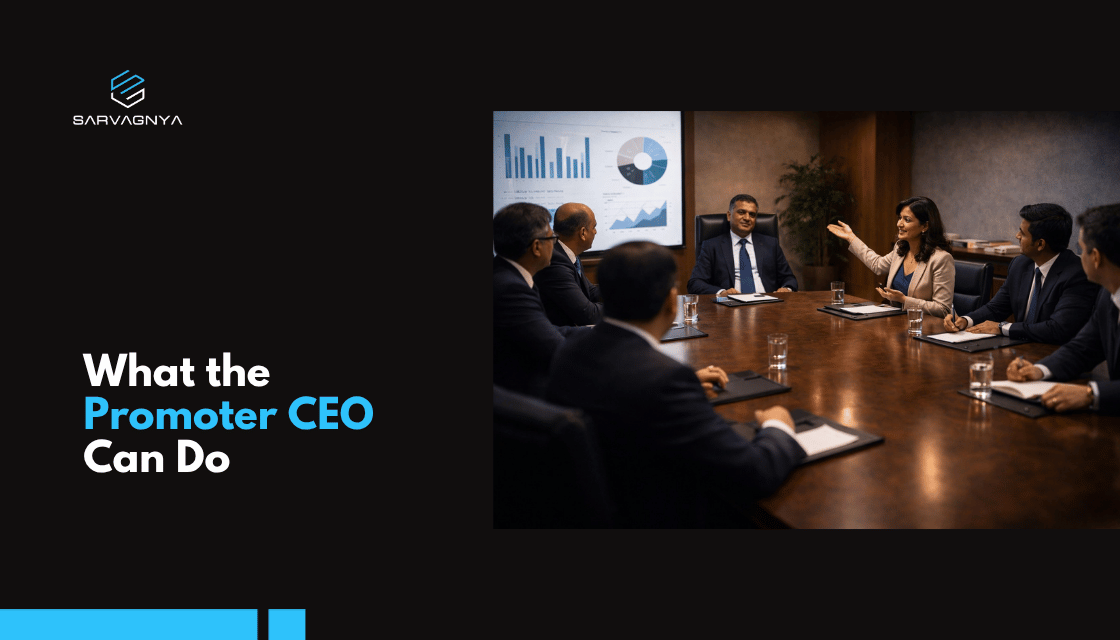
Ask last, not first. When the Promoter CEO speaks first in a meeting, they set the frame — and the room adjusts to it. The simple discipline of asking others to present their assessment before sharing your own view creates the conditions for genuine input rather than polished agreement.
Separate the decision from the person. In promoter businesses, strategic decisions are often personal. The CEO must explicitly signal that challenging a strategy is not a challenge to the founder — it is a professional contribution. This has to be said aloud, repeatedly, and then demonstrated in behaviour when challenge actually occurs.
Reward the uncomfortable truth, visibly. The moment that defines psychological safety in a promoter business is not when someone agrees with the CEO. It is what happens when a VP raises a concern that turns out to be right. Public acknowledgement of that courage changes the calculus for every other leader in the room.
Create a channel outside the room. Structured one-on-ones, anonymous leadership pulse surveys, and the deliberate use of external advisors or board members as sounding boards can surface what the formal meeting dynamic suppresses. The goal is not to bypass the leadership team — it is to recover the candour that the room has trained out of them.
The Cost of Continuing to Ignore This
India’s promoter-led businesses are the backbone of its economy. Many are scaling rapidly, professionalising their management, and navigating genuinely complex strategic terrain. The Promoter CEO’s vision, drive, and personal accountability have often been the engine of that growth. But at a certain scale, vision without honest counsel becomes vulnerability.
The VP who stays silent in the meeting and candid in the corridor is not being disloyal. They are being rational — responding precisely as the cultural and organisational environment has taught them to respond. The responsibility for changing that environment sits with the person whose authority created it.
The science is unambiguous. The business case is proven. What remains is the will to act — and the self-awareness to recognise that the most important thing a Promoter CEO can do for their organisation is to make it genuinely safe for the people around them to say what they actually think.
Because the most dangerous words in a promoter-led business are not the ones that challenge the strategy. They are the ones that never get said at all.